
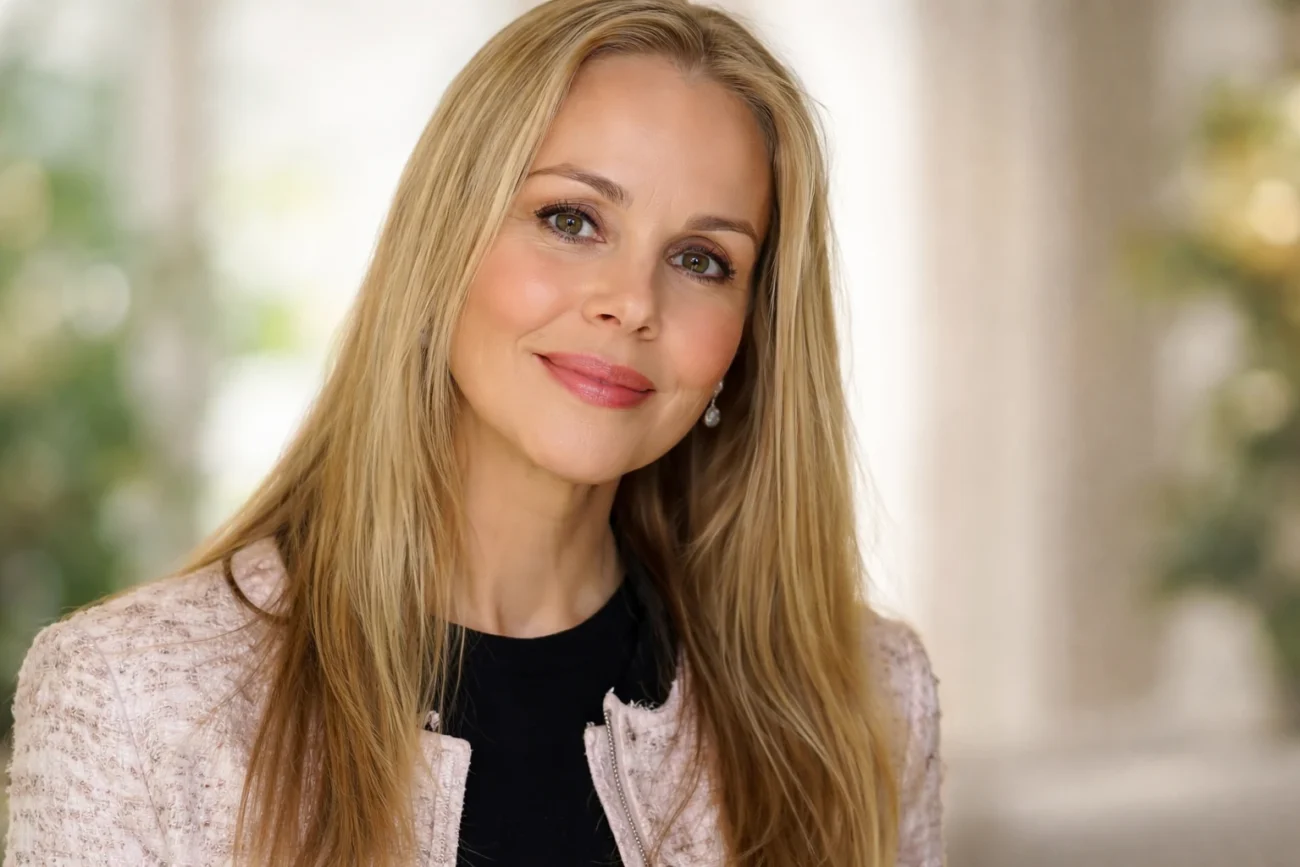
On October 28, 1993, when tobacco heiress Doris Duke died at age 80, the headlines were immediate and predictable: a vast fortune, a controversial will, and a circle of insiders whose relationships with Duke would soon be scrutinized in court. Among those names was one that continues to draw curiosity decades later—Charlene Gail Heffner, better known publicly as Chandi Heffner. For a brief, intense period in the early 1990s, she stood at the center of one of the most unusual inheritance disputes in modern American history.
Yet outside that legal drama, Charlene Gail Heffner has remained largely private. Her story is not one of a conventional celebrity or public career, but of a woman whose life intersected with immense wealth, personal loyalty, and legal conflict—and who later stepped away from that spotlight. To understand why her name still resonates, it helps to look closely at what is actually known, what has been reported, and where the public record ends.
Early Life and Background
Compared with the high-profile figures she became associated with, Charlene Gail Heffner’s early life is sparsely documented in reliable public sources. There is no widely confirmed, detailed account of her childhood, education, or family background in the same way there is for Doris Duke, whose lineage and fortune were well chronicled.
What can be said with reasonable confidence is that Heffner was an adult in her mid-30s by the late 1980s, when she entered Duke’s life. Contemporary reporting from that period identifies her as a woman from outside the elite social circles typically associated with American heiresses. That difference in background would later become a focal point in how the media framed their relationship.
The limited documentation of her early years has contributed to the haze surrounding her biography. Many online profiles attempt to fill in those gaps, but they often rely on repetition rather than verifiable sourcing. A careful reading of the record suggests that much of her pre-Duke life remains private by design.
Meeting Doris Duke
Charlene Gail Heffner’s life changed dramatically when she met Doris Duke, the only child of tobacco magnate James Buchanan Duke. By the time of their meeting, Doris Duke had lived a long and complicated life marked by wealth, philanthropy, and personal loss. She was also known for forming intense relationships with a small circle of trusted individuals.
Accounts of how Heffner and Duke met vary in detail, but they consistently place their connection in the late 1980s. Duke, who had no biological children, developed a close bond with Heffner that would soon take an extraordinary legal form. In 1988, Duke formally adopted Charlene Gail Heffner as her daughter.
Adult adoption is legal in many jurisdictions, including those relevant to Duke’s estate, but it is relatively uncommon. In this case, the adoption attracted attention almost immediately because of Duke’s immense wealth. The move raised questions about inheritance, intention, and the nature of their relationship, even before any legal conflict emerged.
The 1988 Adoption and Its Implications
The adoption of Charlene Gail Heffner by Doris Duke in 1988 was not a symbolic gesture. It had clear legal consequences, particularly regarding inheritance rights. At the time, Duke’s fortune was widely estimated to be worth more than a billion dollars, making any potential heir a figure of intense interest.
For Heffner, the adoption appeared to place her in a position of significant importance within Duke’s personal and financial world. Contemporary reporting described her as Duke’s adopted daughter, a designation that carried both emotional and legal weight. In the context of estate planning, that status could have positioned her as a primary beneficiary.
But here’s where the story becomes complicated. The relationship between Duke and Heffner did not remain stable. By the early 1990s, reports indicated that the two had experienced a falling out, though the precise causes were never fully documented in a consistent, verifiable way. This shift would have profound consequences when Duke later revised her will.
Doris Duke’s Death and the Estate Controversy
When Doris Duke died in 1993, her final will surprised many observers. Despite having adopted Charlene Gail Heffner just five years earlier, Duke did not leave her the bulk of the estate. Instead, much of the fortune was directed toward charitable causes, with significant control placed in the hands of Duke’s butler and confidant, Bernard Lafferty.
The exclusion of Heffner from the primary inheritance immediately raised questions. As Duke’s legally adopted daughter, she might have been expected to play a central role in the estate. Her absence from the will fueled speculation about the nature of her relationship with Duke in the years leading up to her death.
Heffner responded by challenging the estate. Her claims included allegations that Duke had promised to support her financially for life and that those promises had not been honored. The case quickly became a focal point in a broader legal battle over Duke’s estate, which involved questions about undue influence, mental capacity, and fiduciary responsibility.
The Legal Battle and Settlement
The dispute over Doris Duke’s estate was complex and extended beyond Heffner’s individual claims. Multiple parties were involved, and the case drew significant attention from both the media and the legal community. At its core, the battle highlighted the difficulties of managing and distributing an estate of extraordinary size.
Charlene Gail Heffner’s role in this process was both central and limited. She was one of the most visible challengers to the will, but she was not the only party involved in litigation. Her claims focused on her status as Duke’s adopted daughter and on alleged agreements between them.
In December 1995, Heffner reached a settlement with the estate. She agreed to accept $65 million, a substantial sum by any standard, in exchange for dropping her legal claims. The settlement allowed her to step away from the ongoing litigation, which continued to unfold among other parties.
The figure itself has often been cited in discussions of the case. While $65 million is an enormous amount, it represented only a small fraction of an estate valued at over $1 billion. That contrast has shaped how observers interpret the outcome, with some viewing it as a compromise and others as a missed opportunity for a larger claim.
Public Image During the 1990s
During the height of the estate controversy, Charlene Gail Heffner became a subject of intense media interest. Coverage often focused on her relationship with Doris Duke, her sudden rise into the orbit of immense wealth, and the legal questions surrounding her claims.
The tone of that coverage varied widely. Some reports portrayed her sympathetically, as a woman who had been promised a place in Duke’s life and legacy. Others framed her more skeptically, emphasizing the unusual nature of the adoption and the financial stakes involved.
What’s striking is how quickly that attention faded. Once the settlement was reached, Heffner largely disappeared from mainstream headlines. Unlike many figures who remain in the public eye after high-profile legal cases, she did not pursue a public career or cultivate media visibility.
Life After the Settlement
After 1995, Charlene Gail Heffner’s public profile changed dramatically. There were no major interviews, no high-profile business ventures tied directly to her name, and no sustained presence in entertainment or politics. Instead, she appeared to choose a quieter path.
In more recent years, Heffner has been associated with philanthropic efforts, particularly through organizations connected to her name. Public profiles describe her as involved in charitable work focused on healthcare and humanitarian assistance, including projects in India.
According to these descriptions, she has played a leadership role in organizations such as CDHIF USA and CDHIFI India. These groups are presented as providing medical care and support to underserved communities, as well as veterinary services for animals. While these claims are largely based on organizational materials, they align with a broader pattern of individuals who turn inherited or settlement wealth toward philanthropic initiatives.
Independent verification of the scale and impact of these efforts is limited in mainstream reporting. Still, the available information suggests that Heffner has spent much of her later life outside the spotlight, focusing on projects that do not rely on media attention.
Personal Life and Relationships
One of the most consistent features of Charlene Gail Heffner’s biography is how little is publicly confirmed about her personal life. There is no widely verified information about marriage, children, or long-term partnerships that meets the standard of reliable reporting.
This absence has led to speculation in some corners of the internet, but speculation is not the same as fact. A responsible account should acknowledge that her personal life remains largely private. That privacy may be intentional, especially given the intense scrutiny she experienced during the estate dispute.
The contrast between her brief period of public visibility and her later low profile is notable. It suggests a deliberate decision to step away from the kind of attention that defined the early 1990s chapter of her life.
Financial Standing and Net Worth
Estimating Charlene Gail Heffner’s net worth is difficult, largely because she is not a public business figure and does not disclose financial details. The most concrete figure associated with her finances remains the $65 million settlement she received in 1995.
Any current estimate of her net worth would need to account for how that money was managed, invested, or spent over the decades since. Without verified financial disclosures, such estimates remain speculative. It is reasonable to assume that the settlement provided long-term financial security, but precise figures are not publicly confirmed.
What is clearer is that her financial story is closely tied to the Doris Duke estate. Unlike entrepreneurs or entertainers whose wealth grows through ongoing public work, Heffner’s financial narrative is rooted in a single, defining legal outcome.
Public Legacy and Cultural Interest
Charlene Gail Heffner’s lasting cultural relevance comes from the unusual nature of her story. The combination of adult adoption, immense wealth, and legal conflict makes her case a point of reference in discussions about inheritance law and personal relationships among the ultra-wealthy.
Doris Duke’s legacy, including the charitable foundations funded by her estate, continues to draw attention. As long as Duke remains a subject of interest, the people connected to her final years—including Heffner—are likely to remain part of that narrative.
What sets Heffner apart is the contrast between her brief moment of public prominence and her subsequent retreat. In an era when many individuals seek to extend their visibility, her decision to step back has made her story more enigmatic.
Where Charlene Gail Heffner Is Now
Today, Charlene Gail Heffner is not a regular presence in mainstream media. The most recent publicly available information ties her to philanthropic work and organizational leadership, particularly in international contexts.
Her current life appears to be defined less by the legal battle that once brought her into the spotlight and more by private pursuits and charitable activities. There are no widely reported recent controversies or public statements that significantly reshape her narrative.
That relative quiet has, in some ways, preserved the mystery around her. For many people, she remains the woman at the center of a famous inheritance dispute. For others, she represents a figure who moved on from that moment and built a different kind of life away from public scrutiny.
Frequently Asked Questions
Who is Charlene Gail Heffner?
Charlene Gail Heffner is best known as the woman adopted by tobacco heiress Doris Duke in 1988. She is often referred to as Chandi Heffner or Chandi Duke Heffner. Her name became widely known during the legal disputes over Duke’s estate following Duke’s death in 1993.
Why did Doris Duke adopt Charlene Gail Heffner?
Doris Duke adopted Heffner as an adult, which is legally permissible but relatively uncommon. The exact personal reasons behind the adoption are not fully documented in reliable sources. The adoption had significant legal implications, particularly regarding inheritance rights.
How much money did Charlene Gail Heffner receive?
Charlene Gail Heffner received a settlement of $65 million in 1995 as part of the resolution of her claims against Doris Duke’s estate. This amount was substantial but represented a small portion of the overall estate.
Was Charlene Gail Heffner in Doris Duke’s will?
No, she was not a primary beneficiary in Doris Duke’s final will. Despite being Duke’s adopted daughter, she was excluded from the main inheritance, which led to her legal challenge against the estate.
What is Charlene Gail Heffner doing now?
Public information suggests that she is involved in philanthropic work, including leadership roles in charitable organizations focused on healthcare and humanitarian efforts. She maintains a low public profile and does not frequently appear in media coverage.
Is Charlene Gail Heffner married?
There is no widely confirmed public information about her marital status or family life. Much of her personal life remains private, and responsible sources do not provide detailed accounts of her relationships.
Conclusion
Charlene Gail Heffner’s life cannot be separated from the extraordinary circumstances that brought her into public view. Her adoption by Doris Duke and the legal battle that followed placed her at the center of a story about wealth, trust, and the limits of personal relationships under public scrutiny.
But the truth is, that chapter represents only part of her life. After the headlines faded, she chose a path that kept her largely out of the spotlight. That decision has shaped how she is remembered, leaving a story that feels both well-known and incomplete.
Her biography is a reminder that not every figure tied to a major public event remains a public figure forever. Some step away, taking their experiences with them, leaving behind only the record of what happened and the questions that still linger.
In the end, Charlene Gail Heffner remains a figure defined as much by what is known as by what is not. That balance—between visibility and privacy, certainty and mystery—is what continues to draw readers back to her story.
