
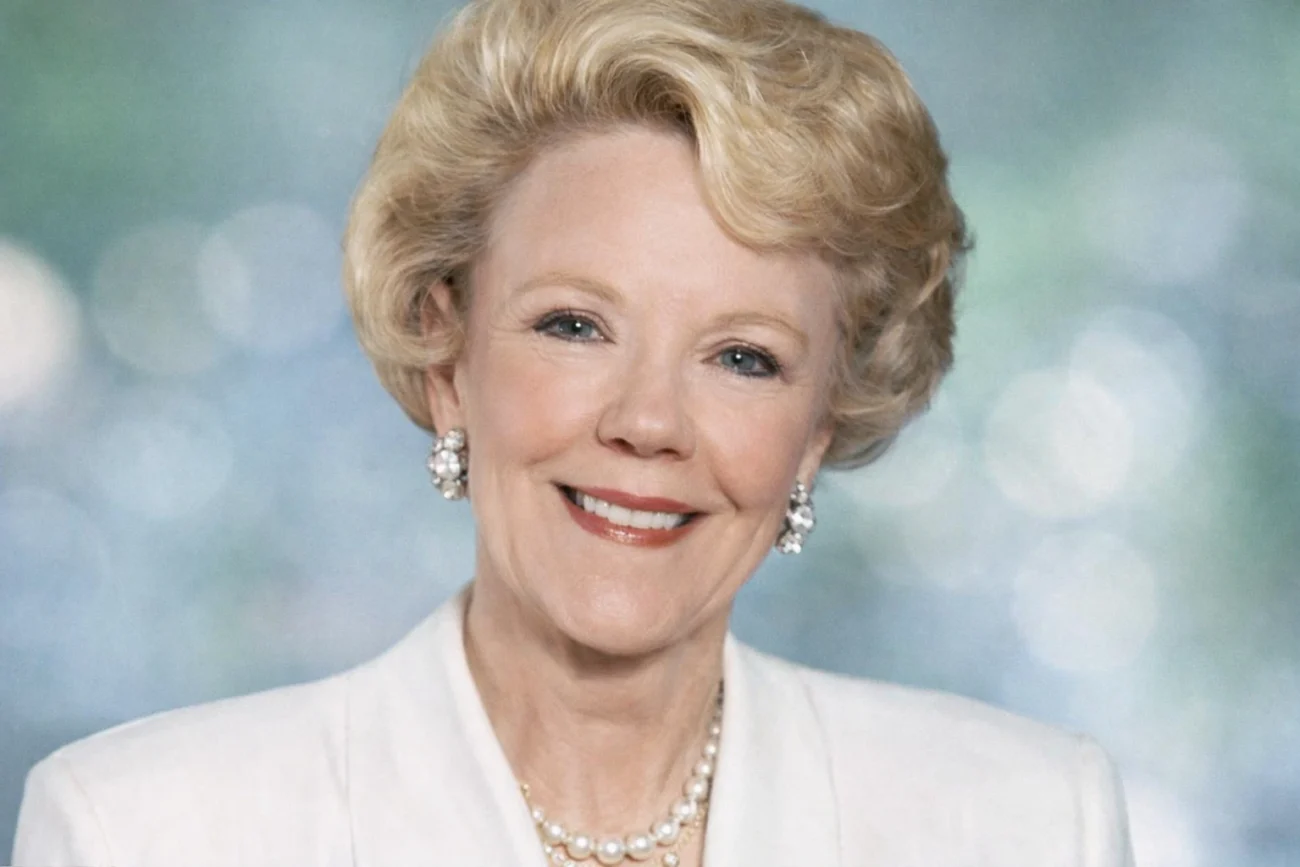
In the history of American business, Ray Kroc stands as one of the most recognizable figures of the 20th century—the man who turned McDonald’s into a global empire. But behind that towering legacy sits a far quieter story, one that rarely makes headlines. Marilyn Kroc Barg, his only child, lived largely outside the spotlight, leaving behind a life that is both deeply connected to one of the most famous brands in the world and yet strikingly undocumented.
For readers who encounter her name, the curiosity is immediate. Who was she? Did she share in her father’s empire? Why does so little seem to be known about her? The answers reveal not a hidden tycoon or public philanthropist, but something more human: a private life that unfolded alongside, but not inside, a story of global fame.
Early Life and Family Background
Marilyn Kroc was born into a family that, at the time, was far from wealthy or well known. Her father, Ray Kroc, was still years away from his defining role in building McDonald’s. He worked a series of jobs in sales, including as a paper cup salesman and later a distributor of milkshake machines. Her mother, Ethel Fleming, was Ray’s first wife, and their marriage began in 1922.
Marilyn grew up during a period of economic uncertainty in the United States, shaped by the Great Depression and the shifting fortunes of her father’s early career. This was not the childhood of a corporate heiress. Instead, it was one of relative normalcy, with no indication that her family would one day be tied to a global brand recognized in nearly every country.
Not many people know this, but Ray Kroc’s rise to prominence did not begin until he was in his 50s. By that time, Marilyn was already an adult. That timing would shape the course of her life in ways that set her apart from the typical narrative of children raised inside immense wealth and influence.
Growing Up Before McDonald’s Fame
The truth is, Marilyn Kroc Barg did not grow up inside the McDonald’s empire. When her father first encountered the McDonald brothers in California in the 1950s, she was already well into adulthood. That means she experienced his rise from relative obscurity to business icon as an observer rather than as a child shaped by that transformation.
This distinction matters more than it might seem. Many readers assume that family members of major business figures share in their public identity, but Marilyn’s life appears to have remained separate. She was not positioned as a public representative of the McDonald’s brand, nor did she emerge as a visible figure in the company’s expansion.
Her upbringing and early adulthood suggest a life shaped by ordinary expectations rather than corporate destiny. That perspective helps explain why she never became a central figure in the public narrative surrounding her father.
Marriage and Personal Life
At some point in her adult life, Marilyn Kroc married and became Marilyn Barg. Public records and death notices identify her as the wife of James W. Barg, and she was also referred to as Lynn J. Barg, a variation of her name that appears in formal records. These details, though limited, provide one of the clearest glimpses into her personal life.
She lived in Illinois, with connections to places such as Evanston and Arlington Heights. These suburban areas near Chicago suggest a stable, private lifestyle far removed from the media attention that would later surround the Kroc name. There is no widely documented record of her pursuing a high-profile career or engaging in public-facing business ventures.
What’s surprising is how little detail exists beyond these basic facts. There are no extensive interviews, no widely cited personal writings, and no major public roles that would have brought her into broader recognition. That absence has left space for speculation, but it also reinforces the likelihood that she chose a life away from public scrutiny.
Relationship With Ray Kroc
The relationship between Marilyn and her father is not extensively documented in public sources, but the available timeline offers some clues. Ray Kroc career was demanding, especially during the years when he was building McDonald’s into a franchise powerhouse. His work required constant travel, negotiation, and oversight.
At the same time, his personal life included multiple marriages. After divorcing Ethel Fleming, he married Jane Dobbins Green and later Joan Kroc, who would become widely known for her philanthropy. These changes in family structure suggest a complex personal environment, though there is little direct evidence detailing how these dynamics affected Marilyn.
But here’s the thing. The absence of public detail does not mean the absence of a relationship. It simply means that whatever existed between father and daughter was largely kept out of the public record. In an era before constant media coverage, that kind of privacy was far more common than it is today.
A Life Largely Outside the Spotlight
Marilyn Kroc Barg’s life stands in contrast to the highly visible figures often associated with major business families. She did not appear as a spokesperson for McDonald’s, nor did she take on a leadership role within the company. Her name rarely appears in business reporting, and she is not prominently featured in most biographies of Ray Kroc.
That said, her position as his only child places her in a unique historical context. She represents a personal dimension of Ray Kroc’s life that is often overshadowed by his professional achievements. While the McDonald’s story is told through expansion charts and franchise agreements, Marilyn’s story is quieter and less defined.
The lack of public documentation has led some modern websites to fill in the gaps with unverified claims. These can include assertions about business ventures, charitable work, or personal interests that are not supported by strong evidence. Readers should approach such claims with caution, especially when they are not backed by credible sources.
Death and Historical Context
Marilyn Kroc Barg died in September 1973, according to publicly available records. This places her death more than a decade before her father’s passing in 1984. It also means she did not witness the full extent of McDonald’s global dominance or the later philanthropic efforts associated with the Kroc name.
Her mother, Ethel Kroc, had died earlier in 1965. These losses occurred during a period when Ray Kroc was still actively building his business empire. The timing suggests that Marilyn’s life intersected with the rise of McDonald’s but did not extend into its most widely recognized era.
Some online sources claim specific causes of death, including references to health conditions, but these claims are not consistently supported by strong public records. Without clear documentation, such details remain uncertain and should be treated with care.
The Question of Wealth and Inheritance
One of the most common questions surrounding Marilyn Kroc Barg concerns wealth. Given her father’s immense success, it is natural to wonder whether she inherited a portion of his fortune or played a role in managing it. The available evidence, however, does not provide a clear or detailed answer.
Because she died before Ray Kroc, she was not part of the estate arrangements that followed his death. His third wife, Joan Kroc, became the primary heir and later gained recognition for donating large sums to charitable causes, including the Salvation Army and public broadcasting.
The absence of detailed financial records related to Marilyn means that any discussion of her net worth would be speculative. It is reasonable to assume that she benefited from her family’s resources to some degree, but the extent of that benefit is not publicly documented in a reliable way.
Public Image and Legacy
Marilyn Kroc Barg does not have a widely defined public image in the way that many figures connected to major business empires do. There are no widely recognized speeches, interviews, or philanthropic initiatives directly attributed to her in the public record. This lack of visibility has contributed to a sense of mystery around her life.
But the truth is simpler. Her legacy is tied less to public achievements and more to her place within a well-known family. She is part of the personal history behind one of the most recognizable corporate stories in the world, even if her own life did not unfold on a public stage.
That position raises an interesting point about how history is remembered. Public figures are often defined by what they did in the spotlight, but many lives connected to those figures remain largely unseen. Marilyn’s story reminds us that not every life linked to fame becomes part of the public narrative.
Why Her Story Still Draws Interest
Search interest in Marilyn Kroc Barg has grown in recent years, driven in part by curiosity about the Kroc family and the broader history of McDonald’s. As more people explore the personal stories behind major business figures, names like hers naturally surface.
There is also a broader trend at play. The internet has made it easier to access fragments of information, but it has also made it easier for unverified claims to spread. In cases like this, where the public record is limited, those claims can quickly take on a life of their own.
For readers, the key is to separate curiosity from assumption. Marilyn Kroc Barg’s life is worth understanding, but it should be understood on the basis of what can be confirmed rather than what has been repeated.
Frequently Asked Questions
Who was Marilyn Kroc Barg?
Marilyn Kroc Barg was the only daughter of Ray Kroc, the businessman who built McDonald’s into a global franchise. She was born during his first marriage to Ethel Fleming and later married James W. Barg. Her life was largely private, with limited public documentation.
Did Marilyn Kroc Barg work for McDonald’s?
There is no reliable public evidence that Marilyn Kroc Barg held a role within McDonald’s or participated in its management. Most accounts of the company’s growth focus on Ray Kroc and his business partners, with no significant mention of her involvement.
What was Marilyn Kroc Barg’s net worth?
There is no verified public estimate of Marilyn Kroc Barg’s net worth. Because she died before her father, she was not a primary beneficiary of the estate that later became associated with Joan Kroc’s philanthropy.
When did Marilyn Kroc Barg die?
Marilyn Kroc Barg died in September 1973. This was more than a decade before Ray Kroc’s death in 1984, placing her life within an earlier phase of the Kroc family story.
Was Marilyn Kroc Barg involved in philanthropy?
There is no widely documented record of major philanthropic work directly attributed to Marilyn Kroc Barg. While some websites claim she was involved in charitable efforts, these claims are not consistently supported by strong sources.
Why is there so little information about her?
Marilyn Kroc Barg appears to have lived a private life outside the public spotlight. Because she did not hold a prominent public role and died relatively early, fewer records and accounts of her life are available compared to other members of the Kroc family.
Conclusion
Marilyn Kroc Barg’s story does not follow the familiar arc of fame, influence, and public recognition. Instead, it sits quietly alongside one of the most well-known business narratives in modern history. She was part of the Kroc family, but she was not a public extension of its brand.
Her life unfolded before the full weight of her father’s success took shape, and it ended before the family’s later philanthropic chapter began. That timing placed her in a unique position, connected to a major legacy but not defined by it. It also helps explain why her story feels incomplete when viewed through the lens of modern expectations.
What remains is a portrait of a private individual whose connection to a famous name has drawn attention long after her death. The limited record does not diminish her life. If anything, it highlights the difference between public legacy and personal history.
For readers, the most honest understanding of Marilyn Kroc Barg is also the simplest. She was Ray Kroc’s daughter, she lived outside the spotlight, and her story reminds us that not every life connected to fame is meant to be widely known.
